
Usage
Minutes expose hidden cost
Phone, model, voice, recording, and post-call analysis often scale with minutes even when the vendor sells a monthly plan.
Buyer calculator
Estimate the real monthly cost of an AI receptionist by separating subscription, usage, phone minutes, setup, integrations, human fallback, and successful call outcomes.
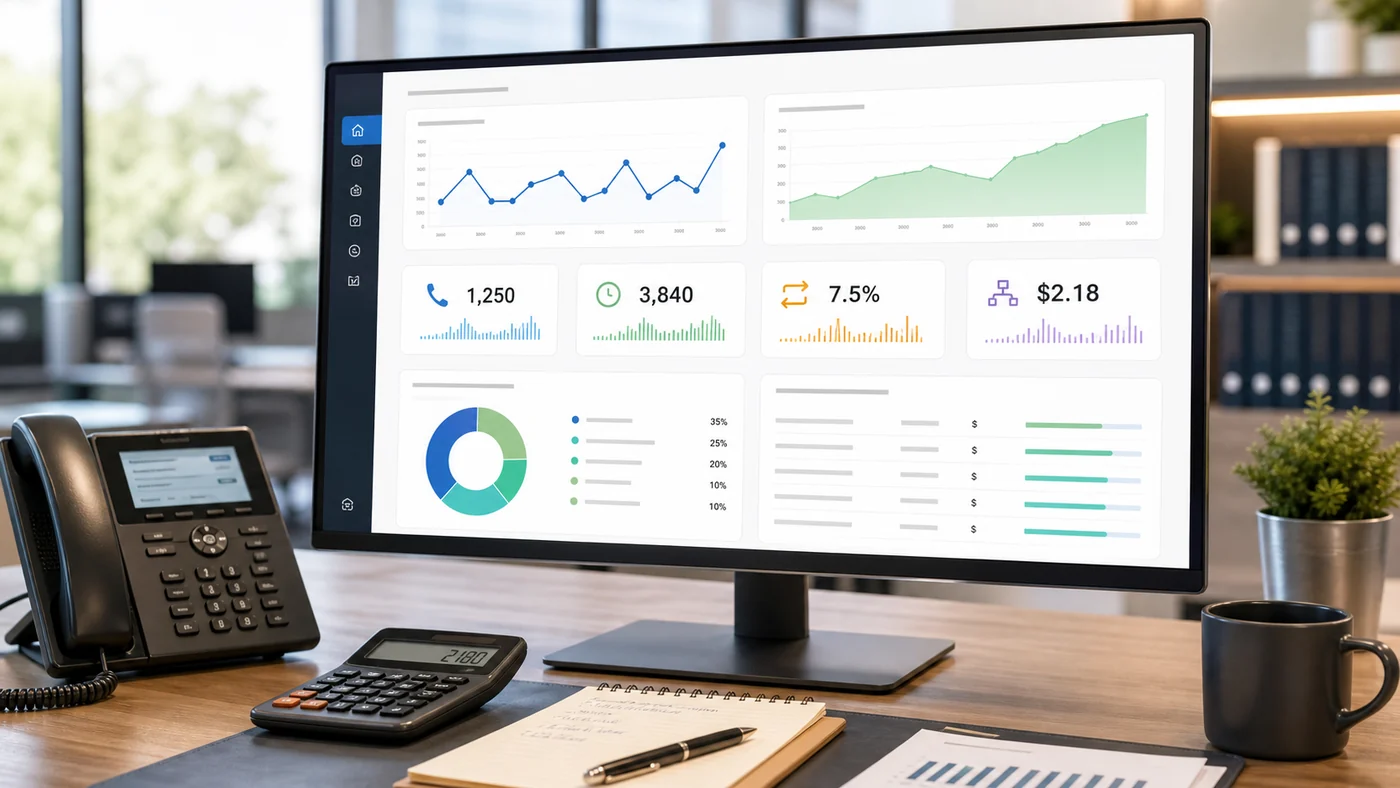
Cost model
Usage
Phone, model, voice, recording, and post-call analysis often scale with minutes even when the vendor sells a monthly plan.
Fallback
Human backup can be worth paying for, but it should be modeled directly instead of treated as a vague support feature.
Outcome
A call that does not book, qualify, route, or summarize cleanly still consumes minutes and staff review time.
Use this calculator before a demo and again after a test call. The first pass gives you a budget range. The second pass should use evidence from vendor logs, call transcripts, transfer records, and workflow completion counts.
A finished AI receptionist may include setup, a number, dashboard, call summaries, and basic integrations in one subscription. A developer platform may separate carrier usage, speech recognition, LLM usage, text-to-speech, recording, storage, logs, and engineering ownership. A hybrid answering service may price human fallback as part of the package.
| Cost line | Question | Why it matters |
|---|---|---|
| Included usage | Are minutes pooled across locations, agents, and phone numbers? | Usage pools can make the same plan cheaper or more expensive at multi-location scale. |
| Telephony | Are numbers, SMS, recording, transfer, SIP, and carrier fees included? | Phone costs are often outside the headline subscription. |
| Setup | What workflow design, prompt tuning, and integration work is included? | Cheap self-serve setup can become expensive if staff must clean up bad calls. |
| Fallback | What happens when the agent cannot complete the task? | Transfer quality affects conversion, caller trust, and staff workload. |
| Completion | Can the vendor report successful outcomes by call type? | Cost per completed workflow needs real outcome data. |
Normalize each quote by monthly platform cost, included usage, overage, telephony, setup, integrations, human fallback, and expected completed workflows. Cost per completed workflow is usually more useful than cost per minute.
Use both. Call count shows business volume, while average minutes expose telephony, model, and voice usage. Long intake calls can make a cheap per-call plan expensive if completion quality is low.
A low-cost agent that fails often can cost more than a higher-priced plan that books, qualifies, or routes calls correctly. Completion rate turns pricing into an outcome model.