

Direct answer: ChatGPT Voice plugins make spoken tool use a buyer-control problem. OpenAI's release notes say Live can now use plugins and connected apps, while Voice in Work can create files, use connected apps, work in a browser and continue unfinished tasks in text. Buyers should require a Voice Tool Approval Proof Packet before approving any voice agent that can touch business apps: app inventory, data scope, permission ceiling, approval prompt, handoff state, side-effect owner, audit log and rollback evidence.
What happened
- OpenAI's September 23, 2026 ChatGPT release note says Live now supports plugins on web, iOS and Android.
- The same release note says Voice is available in ChatGPT Work on web and mobile for creating documents, presentations and spreadsheets, using connected apps, or working in a browser.
- OpenAI says an unfinished Work task can continue in text after the Voice call ends.
- The ChatGPT Voice help page says Live can use plugins and connected apps available to the account, while existing app permissions and workspace restrictions still apply.
- The same help page says actions that need approval prompt the user to review on screen and that spoken approval is not supported.
- TechCrunch covered the rollout as voice-based agentic features on mobile, including spoken workflows such as drafting documents or summarizing connected-app content.
Why this is trending
- Voice is moving from conversation input into an action surface for connected apps and work tasks.
- A spoken request can be ambiguous, interrupted or resumed later, so buyers need proof of what instruction was captured and what task state survived the call.
- Connected apps raise the stakes because the same voice workflow may read private data, draft messages, create files, use browsers or prepare support work.
- OpenAI's on-screen approval rule is a useful buyer anchor: vendors should prove which actions require visual review and which actions can run without it.
- The rollout comes shortly after GPT-Live API and telephony updates, making voice-to-tool governance relevant to both consumer assistants and production phone agents.
The Voice Agent Index take
A buyer should not treat voice access to plugins or connected apps as a simple feature toggle. Ask the vendor to prove the voice boundary: what apps can be reached, what data can be read, which actions can be prepared, which actions require approval, what happens when the call ends, who owns each side effect, and how the team reconstructs the transcript, screen approval, tool call and final result after a dispute. If the vendor cannot show that chain, the voice workflow is not production-ready.
Voice Tool Approval Proof Packet
A buyer checklist for validating connected-app inventory, permission ceilings, on-screen approvals, voice-to-text task handoff, side-effect ownership, monitoring and closure logs before a voice agent can act in business systems.
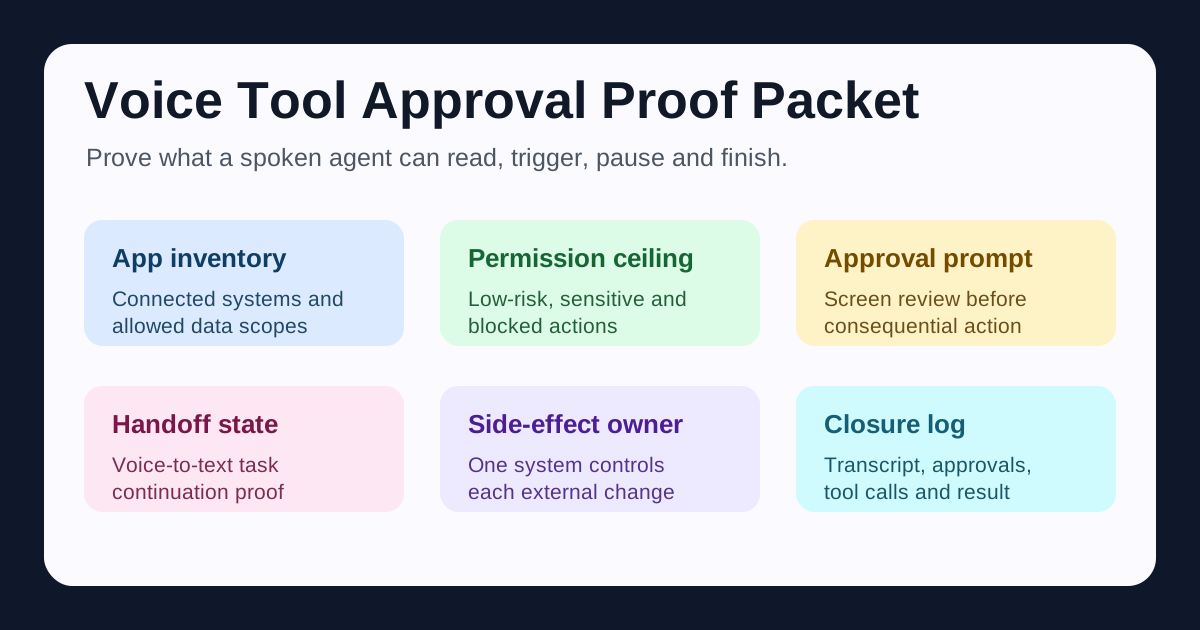
| Proof item | Why it matters | Buyer ask |
|---|---|---|
| App inventory | Voice agents become riskier when they can reach inboxes, calendars, files, browsers, CRMs, ticketing tools or payment systems. | List every connected app, data scope, workspace restriction, account owner, retention rule and disabled integration for the voice workflow. |
| Permission ceiling | Existing app permissions do not prove the voice agent should use every action a logged-in human can use. | Separate read-only, draft-only, low-risk, sensitive and blocked actions, then show tests that enforce the ceiling under spoken prompts. |
| Approval prompt | OpenAI documents on-screen review for actions needing approval; buyers need the same clarity from any voice-agent vendor. | Show which actions require screen review, what the user sees, what cannot be approved by voice alone and how approval is logged. |
| Handoff state | A voice call can end before the task ends, especially when work continues in text or another device. | Prove the exact state captured at handoff: transcript, intent, open task, pending approvals, owner, timeout and safe-stop behavior. |
| Side-effect owner | Phone, browser, plugin and backend sessions may all observe events, but only one path should own each external change. | Map who can send, book, delete, update or transfer; block duplicate execution when multiple sessions or tools are attached. |
| Closure log | After a disputed action, support, security and legal teams need to reconstruct what was said, approved, executed and finished. | Retain transcript, approval screen, tool call, data object, final response, unfinished-task status, rollback result and reviewer notes. |
What buyers should do next
- Inventory the connected apps a voice workflow can reach and classify each action as read-only, draft, low-risk, sensitive or blocked.
- Write spoken test prompts for ambiguous requests, interrupted calls, app switching, mobile-to-desktop continuation and unfinished tasks.
- Require visual approval for consequential actions and verify that spoken approval alone cannot send, pay, delete, book or change records.
- Test the handoff from voice to text or desktop with pending work, then confirm owners, timeouts, notifications and safe-stop behavior.
- Store a closure packet for every consequential voice-driven task with transcript, approvals, tool calls, final status and rollback evidence.
Turn this brief into a vendor packet
Make the vendor prove the workflow before the demo gets polished.
Use the RFP generator and call-test script to turn this news framework into concrete evidence requests, acceptance tests, and escalation rules for your own voice AI rollout.
Buyer FAQs
Does plugin support make a voice agent production-ready?
No. Plugin support expands what the agent can reach. Production readiness still depends on scoped permissions, approval rules, monitoring, handoff behavior, rollback and evidence logs.
Can spoken approval be enough for sensitive actions?
Not for high-risk workflows. OpenAI's Voice help says actions needing approval use on-screen controls and spoken approval is not supported. Buyers should expect similar visual confirmation for consequential actions.
What is the first buyer test after this rollout?
Ask the vendor to run an end-to-end spoken task that uses a connected app, pauses for approval, continues after the voice call ends and produces a complete closure log.
Sources
- OpenAI ChatGPT release notes: September 23, 2026 release note announcing plugins in Live Voice and Voice in ChatGPT Work on web and mobile.
- OpenAI ChatGPT Voice help: Official help page documenting Live plugin use, existing permissions, workspace restrictions and on-screen approval for actions that need review.
- TechCrunch: September 23, 2026 coverage describing the mobile rollout of voice-based agentic workflows in ChatGPT.
- OpenAI API telephony and SIP docs: Official voice-agent architecture context for accepting, rejecting, monitoring, transferring and hanging up calls, plus sideband handling for tools and commands.