

Direct answer: Google announced Android fake call detection on June 2, 2026 to flag suspected spoofed calls when both sides use Phone by Google on Android 12+ with the required messaging and contacts apps. BleepingComputer and 9to5Google independently covered the rollout and its RCS-based confirmation signal. Voice AI buyers should treat the update as a warning that caller trust is now product infrastructure, not a legal footnote.
What happened
- Google said fake call detection helps protect people from scammers using AI deepfakes to impersonate contacts.
- The feature uses a silent, end-to-end encrypted RCS confirmation signal when both sides use Phone by Google.
- If the confirmation is missing, the recipient device can check the contact's real device and warn the user to hang up.
- Google said the feature rolls out globally in June 2026 to Android 12+ devices starting with Pixel devices.
- BleepingComputer and 9to5Google independently reported the rollout, Android 12+ availability, default-on behavior, and Phone by Google requirements.
Why this is trending
- The story links two high-attention buyer fears: AI voice cloning and caller-ID spoofing.
- Google framed fake call detection around impersonation scams, a problem buyers already see in fraud, collections, support, and family-emergency scam coverage.
- Because the protection is built into the phone experience, customers may grow more skeptical of unidentified or weakly verified AI-powered calls.
The Voice Agent Index take
An outbound or inbound voice AI program now needs a caller-trust design, not just a natural-sounding agent. Buyers should require owned numbers, branded caller identity where available, consent and disclosure language, anti-spoofing controls, callback verification, warm-transfer recovery, transcript audit logs, and fraud escalation rules before expanding AI calls into sensitive workflows.
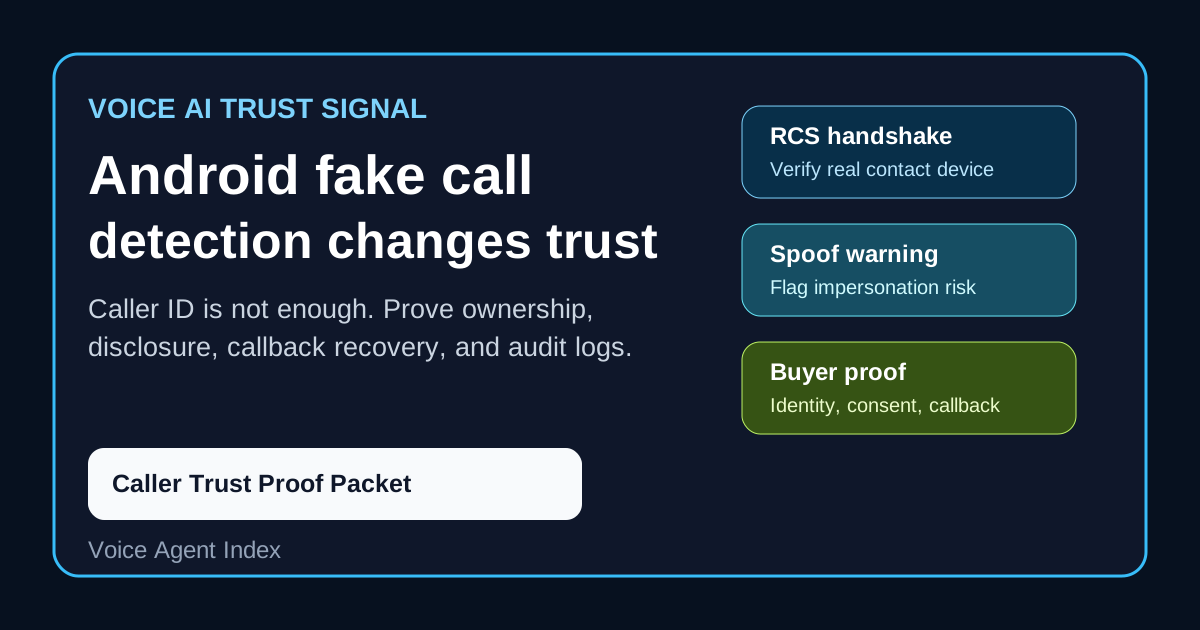
Caller Trust Proof Packet
A buyer checklist for validating voice AI caller identity, spoofing resistance, branded number ownership, consent, disclosure, callback recovery, escalation, and audit evidence.
| Proof item | Why it matters | Buyer ask |
|---|---|---|
| Caller identity ownership | A voice agent can sound legitimate while the number, brand label, or routing path is weak enough to be spoofed or distrusted. | Show number ownership, branded calling setup, carrier authentication status, call-routing inventory, and monitoring for spoofed lookalike numbers. |
| Disclosure and consent | Customers may reject or report AI calls when they cannot tell who is calling, why, and whether an automated system is speaking. | Provide opening scripts, consent capture, opt-out handling, recording notices, and jurisdiction-specific rules for the workflows in scope. |
| Callback verification | Sensitive actions should survive a customer hanging up and calling back through a trusted channel. | Document callback numbers, IVR routes, agent handoff context, verification prompts, and how the system resumes the case safely. |
| Fraud-resistant tool use | A spoofed or manipulated call can become damaging when the agent can update records, collect payment, reset credentials, or schedule service. | List every write action, approval gate, high-risk intent, blocked phrase, rollback path, and audit event generated during the call. |
| Human escalation | Caller suspicion, identity mismatch, account risk, and emotional distress are moments where automation can amplify harm. | Show transfer criteria, live escalation transcripts, post-transfer outcomes, and whether the human receives a complete context packet. |
| Trust evidence after launch | Trust problems appear in complaint rates, hangups, callbacks, fraud reviews, and carrier reputation before they show up in revenue reports. | Track answered-call rate, early hangups, complaint reasons, callback recovery, fraud flags, carrier reputation, and blocked-call events. |
What buyers should do next
- Inventory every number and routing path used by AI voice agents before adding new outbound campaigns.
- Write the first 15 seconds of the call as a trust checkpoint: who is calling, why, whether AI is used, and how to reach a verified human path.
- Define high-risk intents that require callback verification, human approval, or a blocked automated action.
- Ask vendors for sample transcripts, call recordings, tool logs, escalation logs, and carrier identity evidence from similar workflows.
Turn this brief into a vendor packet
Make the vendor prove the workflow before the demo gets polished.
Use the RFP generator and call-test script to turn this news framework into concrete evidence requests, acceptance tests, and escalation rules for your own voice AI rollout.
Buyer FAQs
What is Android fake call detection?
It is a Phone by Google feature that uses a silent RCS-based confirmation signal to help flag suspected spoofed calls that impersonate a user's contacts.
Why does Android fake call detection matter for voice AI buyers?
It shows that customers and device platforms are moving beyond caller ID alone. Voice AI buyers need proof that calls are identified, disclosed, verified, recoverable, and auditable.
What should a voice AI buyer ask after this rollout?
Ask for caller identity setup, branded number evidence, consent and disclosure scripts, callback recovery, fraud-resistant tool permissions, escalation examples, and launch metrics tied to trust.
Sources
- Google Security Blog: Primary source for Android fake call detection, RCS confirmation behavior, rollout timing, Android 12+ availability, and requirements.
- BleepingComputer: Independent security coverage of Google's fake call detection rollout and AI deepfake impersonation framing.
- 9to5Google: Independent Android ecosystem coverage of Phone by Google requirements, RCS behavior, default-on rollout, and Android 12+ scope.