

Direct answer: On October 1, the Western District of Virginia issued a memorandum opinion in Lowrey v. Twilio Inc. granting in part and denying in part motions to dismiss. The court described allegations that probate-marketing texts and calls used Twilio telephone numbers and OpenAI-generated messages or automated voice calls. It let several TCPA and VTPPA claims proceed in part at the pleadings stage, including claims tied to artificial-voice calls. That is not a finding of final liability. For voice-agent buyers, the practical lesson is that platform role, seller identity, consent, AI-voice disclosure, stop-request handling and call logs must be reconstructable before a vendor or customer launches outbound calls.
What happened
- Justia's docket page identifies Lowrey v. Twilio Inc. et al. as case 6:2025cv00116 in the Western District of Virginia.
- Document 99 was decided on October 1 and granted in part and denied in part the Twilio and OpenAI motions to dismiss.
- The opinion describes alleged probate-related texts and artificial-voice calls and allegations involving Twilio numbers and OpenAI-generated messages or automated voice calls.
- Because the case is at the motion-to-dismiss stage, buyers should treat it as a pleading-risk and evidence lesson, not as a final liability ruling.
Why this is trending
- Voice-agent programs often split responsibilities among seller, lead source, CPaaS provider, AI model provider, dialer, agency and CRM owner.
- The ruling shows that platform-role questions can survive early dismissal when allegations plausibly connect providers to making or initiating calls.
- This is distinct from generic robocall or consent coverage because the buyer asset focuses on reconstructing the call path across AI and communications platforms.
The Voice Agent Index take
Imagine an illustrative outbound voice-agent campaign for appointment setting or probate, real estate, healthcare, insurance or debt-related intake. The buyer may hire an agency, the agency may use a CPaaS platform, and the script or voice may be generated by an AI provider. If a recipient disputes consent or stop-request handling, the buyer needs evidence showing who sold the service, who initiated each call, where consent came from, what artificial-voice disclosure was given, how opt-outs were honored and which logs prove the path. This framework is a procurement aid, not legal advice or a finding about the defendants in Lowrey.
AI Call-Path Liability Proof Packet
An original buyer packet for seller of record, platform role, consent source, artificial voice disclosure, stop-request handling and call-path logs.
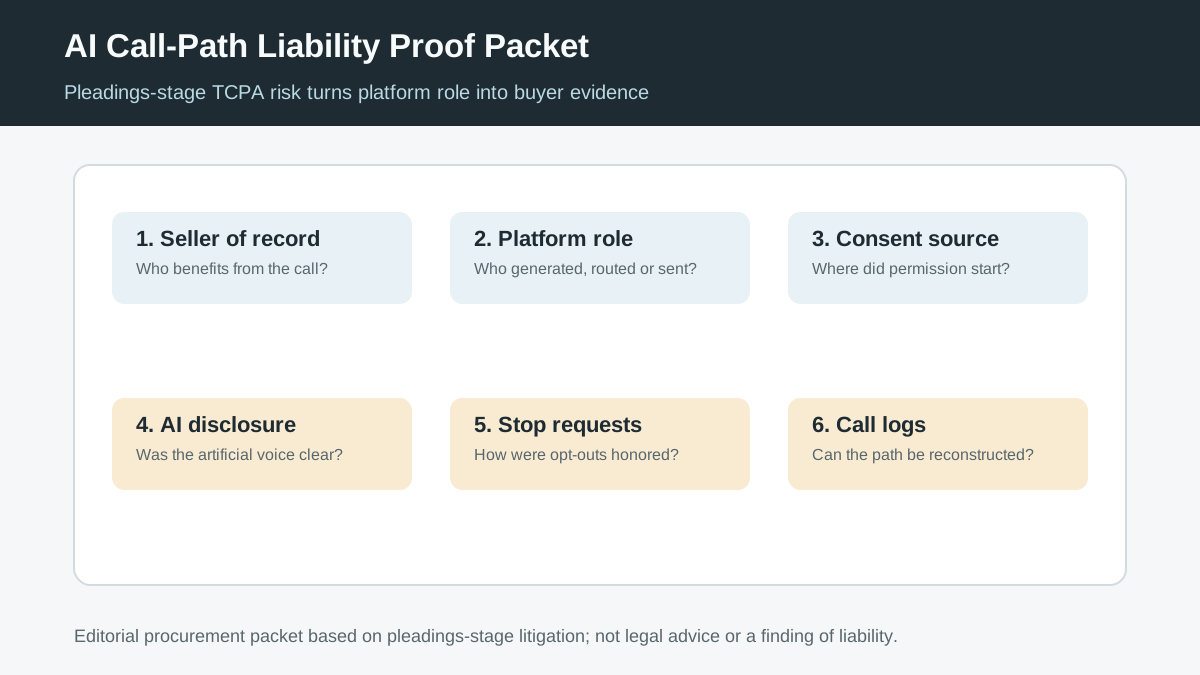
| Proof item | Why it matters | Buyer ask |
|---|---|---|
| Seller of record | TCPA risk can attach to the party whose goods or services are marketed, even when a vendor places the call. | Name the advertiser, beneficial seller, agency, affiliate and customer-support owner for every outbound program. |
| Platform role | AI and communications providers may be alleged to have made, initiated, generated or routed calls depending on facts. | Document which vendor writes prompts, generates audio, owns numbers, triggers calls, hosts the dialer and handles callbacks. |
| Consent source | A call path is only as strong as the consent or exemption evidence tied to the recipient and purpose. | Retain source URL, form, timestamp, IP or channel, consent language, revocation status and permitted call purpose. |
| Artificial voice disclosure | Recipients and regulators may distinguish live agents, prerecorded messages and artificial voices. | Capture the opening script, voice type, disclosure wording, playback sample, language version and QA sample. |
| Stop request handling | A recipient's request to stop can create liability if vendors, sellers and callback systems do not share suppression state. | Keep opt-out phrase handling, DNC synchronization, manual request logs, suppression timestamp and vendor confirmation. |
| Call logs | After a dispute, the team needs to reconstruct who called, what was said, which platform acted and what happened next. | Retain call IDs, number inventory, provider logs, transcript or recording policy, webhook events, billing trail and incident notes. |
What buyers should do next
- Inventory every outbound voice-agent campaign, including agencies, lead sellers, CPaaS providers, model providers and CRM automations.
- Tie each call purpose to consent source, artificial-voice disclosure, opt-out handling and number ownership.
- Require vendors to identify whether they generate, route, initiate, dial, transcribe, host or merely pass through call content.
- Run stop-request tests across the seller, platform, callback line, CRM and suppression list before production scale.
- Preserve call-path logs with enough detail to answer a complaint without inventing facts after the event.
Turn this brief into a vendor packet
Make the vendor prove the workflow before the demo gets polished.
Use the RFP generator and call-test script to turn this news framework into concrete evidence requests, acceptance tests, and escalation rules for your own voice AI rollout.
Buyer FAQs
Did the court find OpenAI or Twilio liable?
No. The October 1 opinion ruled on motions to dismiss and let claims proceed in part. It is not a final liability decision.
Why does a probate-marketing case matter to voice-agent buyers?
It shows how outbound AI voice, CPaaS numbers, seller identity and stop-request handling can become intertwined when a recipient challenges calls.
Can a vendor's TCPA warranty replace buyer evidence?
No. Buyers still need consent source, seller identity, platform role, opt-out handling and log proof tied to each campaign.
Is this legal advice?
No. It is an evidence checklist for procurement and operations teams. TCPA, state law and campaign-specific questions need qualified legal review.
Sources
- Justia Document 99: October 1 memorandum opinion and order granting in part and denying in part motions to dismiss in Lowrey v. Twilio Inc. et al.
- Justia docket: Public docket page for Lowrey v. Twilio Inc. et al., case 6:2025cv00116 in the Western District of Virginia.
- TCPAWorld complaint PDF: Public copy of the complaint used for background on the allegations and call-path framing.
- Henson Legal analysis: Independent legal analysis of the Lowrey ruling and platform-liability implications.