

Direct answer: BleepingComputer reported on October 8 that Microsoft Teams is adding third-party deepfake detection and impersonation protection, with roadmap entries pointing to general availability in November 2026. Microsoft's Graph beta documentation describes an API path for certified third-party detection bots to report synthetic media detections in meetings, including audio voice-clone and video face-swap or lip-sync signals. For voice-agent and meeting-automation buyers, the evidence question is practical: who supplies the detector, what media is analyzed, what signal reaches participants, how false positives or missed detections are handled, and what logs prove the response.
What happened
- BleepingComputer reported that Teams will surface third-party deepfake detection and impersonation-protection signals in meetings.
- A Microsoft 365 roadmap mirror lists the capability as in development, with worldwide desktop, Mac and web availability targeted for November 2026.
- Microsoft Graph beta documentation describes a reportSyntheticMedia action for certified third-party bots admitted to a meeting call.
- The docs describe detection categories including audio voiceClone and video or multimodal faceSwap and lipSync signals.
Why this is trending
- Synthetic voice and video detection is moving from standalone fraud tools into collaboration platforms where business calls and meetings already happen.
- The integration model separates the detector from the meeting experience, which means buyers need proof of provider identity, signal ownership and participant-facing behavior.
- This differs from generic deepfake-warning coverage because the asset focuses on what a voice or meeting buyer should require before trusting detection signals.
The Voice Agent Index take
Imagine an illustrative sales, legal, healthcare or executive meeting program where participants rely on a synthetic-media warning during a live call. A warning icon alone does not prove the detector's scope, evidence, accuracy, retention or escalation process. The buyer should know which provider analyzes media, whether audio, video or both are covered, what detection labels mean, whether participants are notified, how a false signal is challenged, and how incident logs are retained. This framework is a procurement aid, not a finding about Microsoft's final product behavior or a substitute for security review.
Synthetic-Media Signal Proof Packet
An original buyer packet for provider identity, media scope, signal taxonomy, participant notice, false-result handling and incident logs.
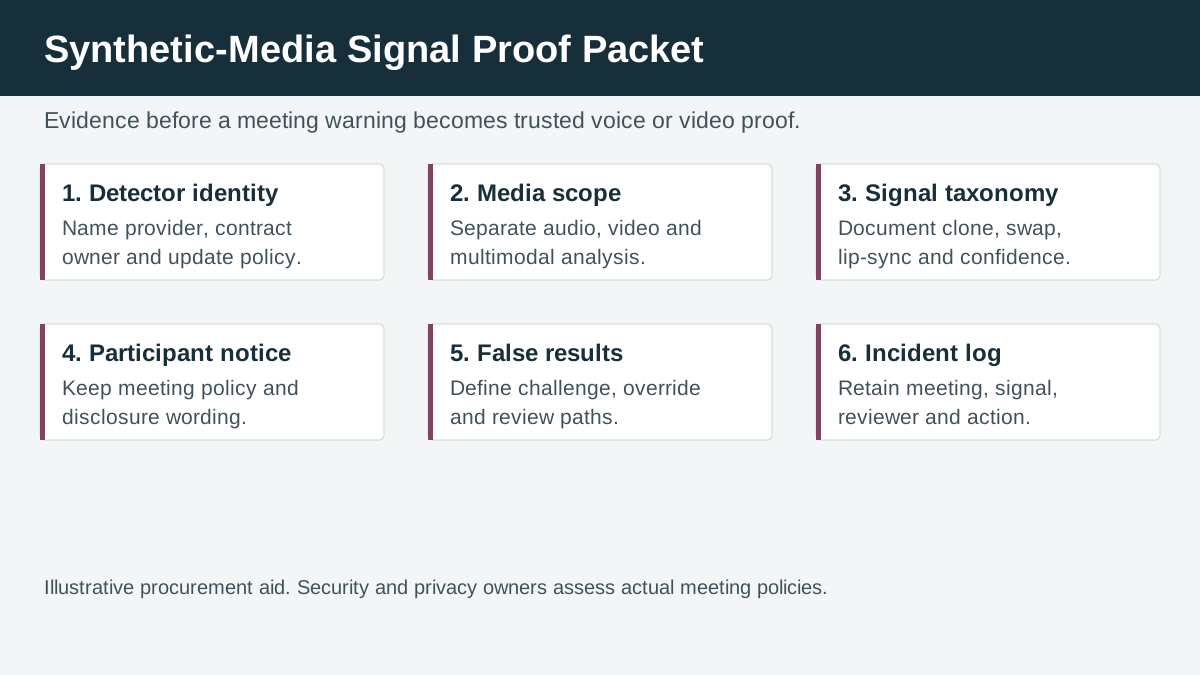
| Proof item | Why it matters | Buyer ask |
|---|---|---|
| Detector identity | Teams may surface signals from supported third-party providers rather than performing every detection itself. | Name the provider, certification path, contract owner, model update policy and accountable support contact. |
| Media scope | Audio-only voice clones, video face swaps and lip-sync manipulation require different evidence and user expectations. | Specify whether audio, video, screen content, captions or multimodal streams are analyzed and retained. |
| Signal taxonomy | A generic warning can hide whether the detector saw a voice clone, face swap, lip-sync anomaly or confidence threshold. | Document each signal type, confidence level, participant display, API field and unsupported case. |
| Participant notice | Meeting participants may need to know when third-party analysis is active and what warning means. | Retain the notice language, meeting policy, organizer control and participant-facing disclosure. |
| False-result handling | A false positive can damage trust, while a missed detection can create fraud, compliance or safety risk. | Define challenge, override, escalation, post-meeting review and correction workflows. |
| Incident log | Live-call decisions need reconstructable evidence after a disputed warning or fraud event. | Keep provider, meeting ID, timestamp, participant, media type, signal, reviewer, action taken and closure status. |
What buyers should do next
- Inventory meetings and voice workflows where synthetic media detection will affect trust, access, approvals or records.
- Ask providers whether detection covers audio, video, lip sync, face swap, captions or multimodal streams.
- Document participant notice, organizer controls and what a warning signal actually means before rollout.
- Create an escalation path for false positives, missed detections and disputed meeting outcomes.
- Retain detection logs with meeting policy, provider identity and human review evidence.
Turn this brief into a vendor packet
Make the vendor prove the workflow before the demo gets polished.
Use the RFP generator and call-test script to turn this news framework into concrete evidence requests, acceptance tests, and escalation rules for your own voice AI rollout.
Buyer FAQs
Is the Teams detection feature generally available now?
The reviewed roadmap coverage describes the capability as in development with general availability targeted for November 2026. Buyers should verify tenant availability before relying on it.
Does Teams itself detect every deepfake?
The reviewed Graph documentation describes certified third-party detection bots reporting synthetic media signals into the meeting experience. Provider identity and scope remain buyer evidence questions.
Can a synthetic-media warning replace identity verification?
No. Detection signals should support, not replace, trusted callback, account verification, transaction limits and human review for sensitive actions.
Is this legal or compliance advice?
No. It is an evidence packet for procurement and operations teams. Security, privacy and legal owners should review actual meeting policies and vendor terms.
Sources
- BleepingComputer: October 8 independent coverage of Teams roadmap entries for third-party deepfake detection and impersonation protection.
- Microsoft Graph beta documentation: Microsoft documentation for reporting synthetic media detections from certified third-party meeting bots.
- Microsoft 365 roadmap archive: Roadmap mirror for item 573451 describing third-party synthetic media detection signals and November 2026 general-availability target.