

Direct answer: Talking Tilly turns voice-agent privacy proof into a buyer checklist. The official policy describes age verification, selfie or ID fallback, live video/audio processing, transcripts, summaries, mood analysis and recordings. Buyers should require a Voice and Video Privacy Proof Packet showing what is collected, which provider receives it, how consent works, what inferences are made, how long data is retained, how users can object or delete data, and which human reviews disputed calls.
What happened
- BleepingComputer's September 2026 coverage framed Talking Tilly as a viral AI-actress hotline that face-scans callers and watches their mood during short conversations.
- WIRED separately reported on the AI actor Tilly Norwood and described direct interaction with the synthetic performer as part of the surrounding public debate.
- Talking Tilly's official privacy policy says the service uses an age-verification provider, Persona, to verify users are over 18 and may require a selfie and government ID when automated verification fails.
- The policy says Tavus powers the live video and audio AI persona and may process video and audio inference, transcription, conversation summary, mood analysis and recordings.
- The policy says the service may process identifiers, age-verification data, live video and audio, transcripts, device information, usage logs, support messages and rights requests.
- The service terms say Talking Tilly is entertainment-only, not a professional, legal, medical or financial service, and state that the service end date is September 27, 2026.
Why this is trending
- Talking Tilly turned abstract voice and video AI privacy questions into a public, easy-to-understand consumer call flow.
- The same building blocks appear in enterprise deployments: identity checks, camera access, microphone input, call recording, transcripts, emotion or sentiment labels and third-party AI providers.
- Age checks and face processing raise a higher evidence bar than ordinary chat because users may not expect biometric-style verification inside an entertainment or support call.
- Mood analysis and conversational memory can create sensitive inferences even when the visible experience feels playful.
- Short-lived viral launches still leave buyer questions about retention, deletion, provider access, incident response, logs and post-service data handling.
The Voice Agent Index take
A voice-agent buyer should not approve video, age-gated or emotion-aware workflows until the vendor can show the privacy packet behind the call. Ask what the agent collects, whether age or face checks are mandatory, which providers receive video and audio, whether mood or sentiment is inferred, what is recorded, how transcripts and summaries are retained, how deletion requests work, and where human review sits. A natural conversation is not enough. The buyer needs evidence that the consent, inference and retention workflow is controlled.
Voice and Video Privacy Proof Packet
A buyer checklist for validating age-gating, face and voice processing, mood inference, call recording, transcript retention, provider chain, user rights and human review in voice or video AI agents.
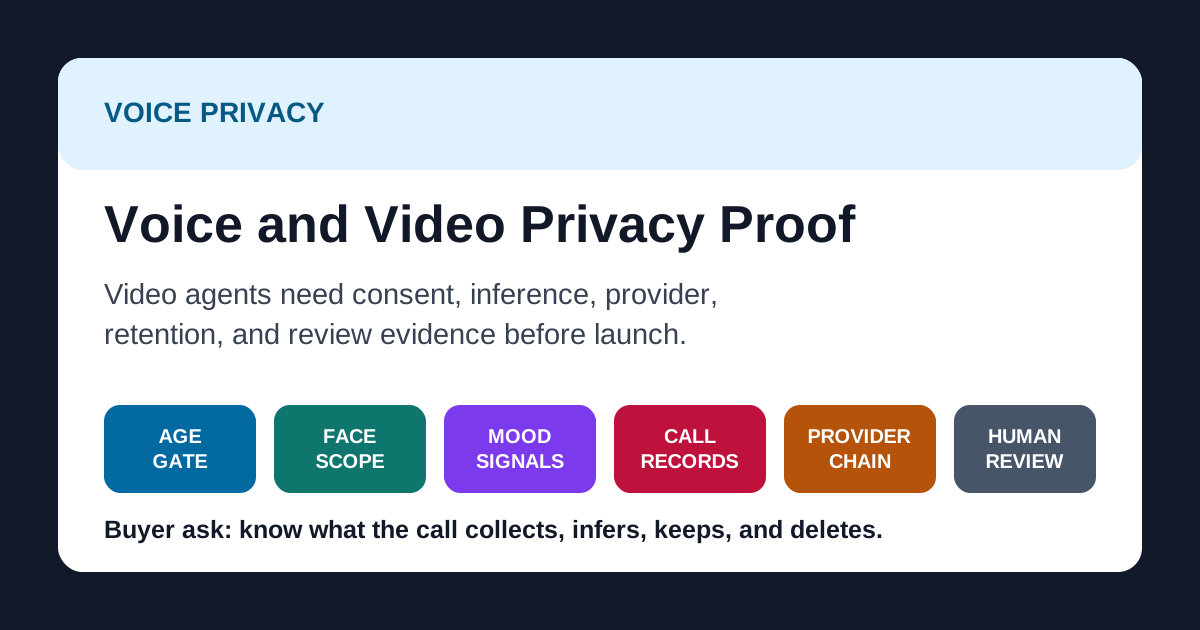
| Proof item | Why it matters | Buyer ask |
|---|---|---|
| Age gate | Age checks can move a simple call into identity-verification workflows with higher privacy, support and retention obligations. | Show when age verification triggers, what happens if automated checks fail, whether selfie or ID review is optional, and how underage attempts are blocked. |
| Face and voice scope | Video and microphone access can collect more sensitive signals than a transcript, especially when identity or mood is inferred. | List exactly which video, image, voice, face, device and session signals are collected, stored, inferred or discarded. |
| Mood inference | Emotion, mood or sentiment labels can influence agent behavior and may create sensitive inferences users did not expect. | Prove which mood labels exist, how they are generated, whether they affect routing or offers, and how users can challenge them. |
| Recording and transcript retention | Recorded calls, summaries and transcripts can become customer records, training data, review evidence or breach exposure. | Show retention periods, deletion paths, training-data exclusions, access controls, export rights and sample redaction process. |
| Provider chain | Voice and video agents often rely on separate vendors for age verification, video generation, speech, transcription and analytics. | Map every provider, data category, purpose, storage location, subprocessors, audit right and fallback if a provider fails. |
| Human review and rights | Users need a practical path to dispute age checks, inference errors, recordings, account decisions or deletion denials. | Show the support workflow for access, deletion, correction, appeal, opt-out, abuse report and manual review requests. |
What buyers should do next
- Inventory every voice or video workflow that asks for camera, microphone, age check, identity proof, sentiment analysis or call recording.
- Separate what is needed to complete the call from what is nice-to-have analytics, memory, training or personalization data.
- Ask vendors to map the provider chain for age verification, live video, speech, transcription, analytics, storage and support review.
- Write deletion, correction, appeal and incident-response paths before launching any workflow that records or infers sensitive signals.
- Test the user experience with denied age checks, consent refusal, deletion requests, escalation requests and disputed mood labels.
Turn this brief into a vendor packet
Make the vendor prove the workflow before the demo gets polished.
Use the RFP generator and call-test script to turn this news framework into concrete evidence requests, acceptance tests, and escalation rules for your own voice AI rollout.
Buyer FAQs
Is Talking Tilly an enterprise voice-agent product?
No. It is an entertainment-focused AI call experience. The buyer lesson is transferable because it combines video, voice, age checks, recordings, transcripts, mood analysis and third-party providers.
What makes face or mood analysis different from ordinary call recording?
Face and mood analysis can create biometric-style or emotional inferences from video and audio. Buyers should require clearer consent, purpose limits, retention rules, provider mapping and review paths.
What should buyers check before enabling video AI calls?
Check age gating, camera and microphone consent, provider access, recording and transcript retention, inference labels, deletion rights, escalation rules and human review evidence.
Sources
- BleepingComputer: September 2026 coverage of the viral Talking Tilly call experience, face scans and mood-watching privacy concerns.
- Talking Tilly privacy policy: Official policy describing age verification, Persona, Tavus live video/audio processing, transcripts, summaries, mood analysis, recordings and user rights.
- Talking Tilly terms: Official terms stating the entertainment-only nature of the service and the September 27, 2026 service end date.
- WIRED: September 2026 reporting on Tilly Norwood, public interaction with the synthetic performer and the broader AI-actor controversy.