
Short Answer
Choose Rosie when a small business wants AI-first answering, website or Google-profile training, call summaries, transcripts, recordings, spam filtering, and simple appointment or lead capture. Choose Ruby when human reception, live chat, appointment scheduling, bilingual service, and judgment-sensitive caller handling matter more. Test urgent calls, pricing questions, transfer requests, and staff summaries before switching.
Quick Recommendation
| Buyer situation | Better starting point | Why |
|---|---|---|
| Small business wants 24/7 AI answering quickly | Rosie | Rosie publicly emphasizes AI answering, business-profile training, summaries, transcripts, recordings, spam filtering, and simple setup. |
| Caller experience depends on human judgment | Ruby | Ruby’s core service is live receptionist and chat coverage for small businesses. |
| Business has many routine missed calls | Rosie | AI-first capture may be enough when calls are repetitive and staff mainly need summaries. |
| Business handles high-value or emotional callers | Ruby | Human reception can matter when callers need reassurance, triage, or judgment. |
| Owner wants to reduce cost before hiring | Test both | Compare monthly plan shape, included minutes or calls, overages, coverage, and staff time saved. |
Product Lens
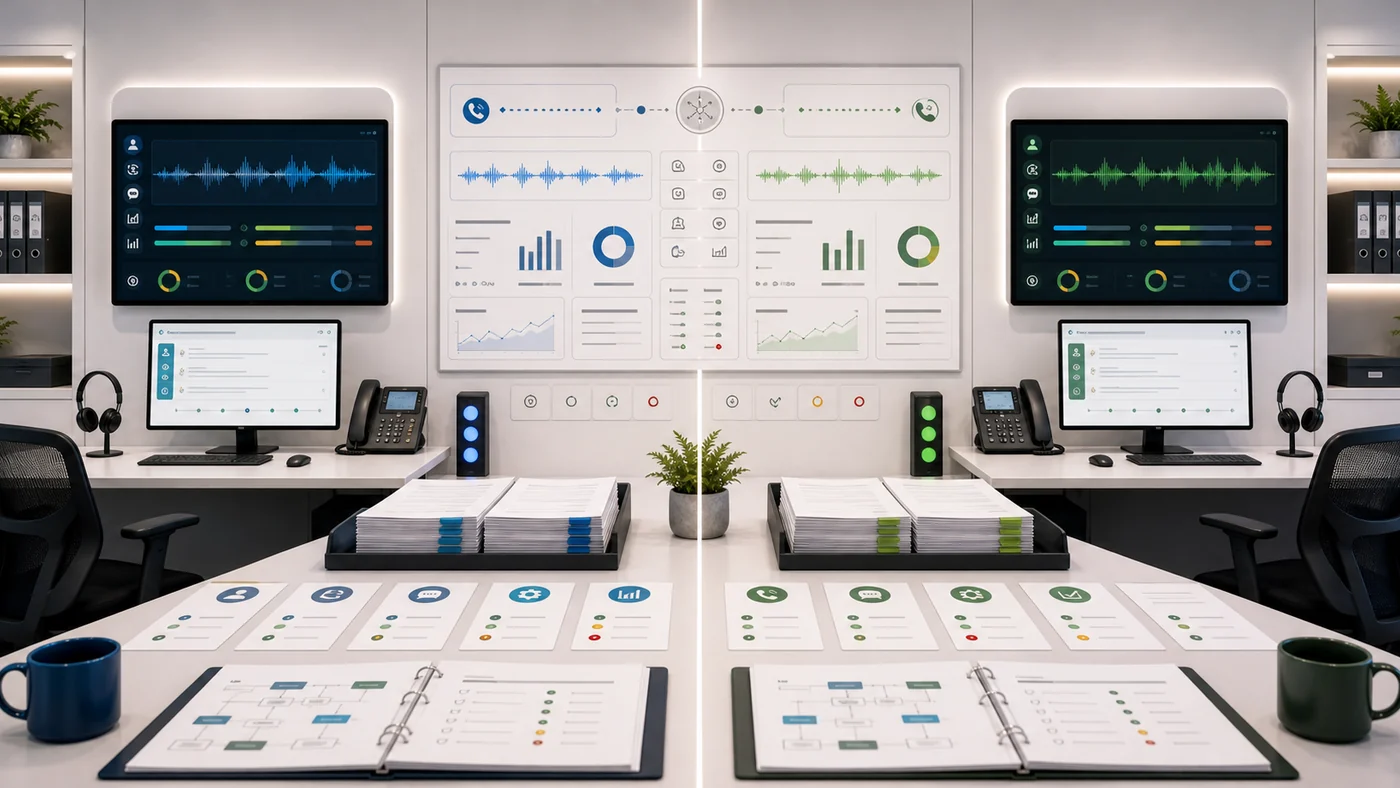
Rosie and Ruby answer different versions of the same small-business problem.
Rosie is AI-first. Evaluate it by how well it answers routine calls, learns business information, blocks spam, captures appointments or leads, and sends summaries, transcripts, and recordings to staff.
Ruby is human-reception-first. Evaluate it by how well live receptionists handle callers, schedule appointments, take messages, support live chat, cover bilingual needs, and create a premium caller experience.
The practical decision is not “AI or no AI.” It is “which calls can be automated safely, and which calls still deserve a human?”
Direct Comparison
| Criterion | Rosie | Ruby |
|---|---|---|
| Category fit | AI receptionist for small businesses | Human receptionist and live chat service with AI features |
| Strongest fit | Routine answering, spam filtering, summaries, transcripts, recordings, appointment or lead capture | Human answering, judgment-sensitive handling, live chat, appointment scheduling, bilingual support |
| Evidence to request | Test calls, transcripts, recordings, summaries, settings, pricing, escalation behavior | Call scripts, receptionist notes, live chat flow, bilingual coverage, AI feature boundaries, pricing |
| Ownership model | Business configures AI knowledge and escalation rules | Ruby service team handles receptionist delivery with buyer-approved instructions |
| Main risk | AI may mishandle nuanced or urgent calls without tight escalation | Higher service cost or less automation control than AI-only answering |
What To Test
Run the same call pack through both paths:
- New customer asking for pricing.
- Appointment request with a scheduling conflict.
- Existing customer asking for a callback.
- Urgent issue that should escalate.
- Spam or sales call.
- Caller asking a question missing from the website.
- Transfer request to a specific staff member.
- After-hours caller who expects follow-up.
Then compare what staff receive after each call. Summaries, transcripts, receptionist notes, recordings, and routing evidence matter more than the sales promise.
Decision Matrix
| Buyer need | Lean Rosie when | Lean Ruby when |
|---|---|---|
| Cost control | The business can automate routine calls and review summaries. | The business needs human handling enough to justify receptionist service. |
| Caller nuance | Most callers ask predictable questions. | Callers need empathy, judgment, persuasion, or complex triage. |
| Staff workflow | Staff mainly need a summary, transcript, recording, or appointment lead. | Staff need receptionist notes, live transfer judgment, and human context. |
| Coverage model | Always-on AI coverage is the priority. | Human weekday or extended coverage is the priority. |
| Brand experience | Fast answering and capture are enough. | Human warmth and service tone are part of the brand. |
Source-Backed Evidence
Rosie’s official site positions Rosie as an AI answering service for small businesses, with business training, call summaries, transcripts, recordings, spam blocking, notifications, and lead or appointment capture. Rosie’s pricing page, small-business page, and privacy policy are practical source checks for cost, fit, and call-data review.
Ruby’s official site positions Ruby around live virtual receptionists, live chat, calls, appointment scheduling, small-business service, and customer experience. Ruby’s plans and pricing page, AI page, and small-business industry page are useful checks for where AI fits beside human reception.
When Rosie Fits First
Start with Rosie when missed calls are mostly routine and the business wants faster capture without hiring or managing human reception. The stronger Rosie pilot is not a perfect one-off call. It is ten ordinary calls that produce summaries, recordings, transcripts, appointments, and clean staff follow-up.
Ask how the AI learns from the website, Google Business Profile, FAQs, staff edits, and missed-call history. Then test where it escalates.
When Ruby Fits First
Start with Ruby when the phone is part of the brand experience. This is common for legal, home services, healthcare-adjacent, professional services, real estate, financial services, and premium local businesses where callers may need reassurance or careful routing.
Ask Ruby to show receptionist instructions, message format, appointment scheduling boundaries, bilingual coverage, live chat coverage, and where AI is used behind the scenes.
Exclusion Rules
Do not replace human reception with AI before testing urgent calls, upset callers, high-value leads, and transfer requests. Exclude Rosie as the only layer if the business cannot define clear escalation rules. Exclude Ruby if the buyer only needs simple after-hours capture and cannot justify human-service cost. Exclude either option if staff cannot review call evidence cleanly.
Related Reading
- AI Receptionist vs Answering Service
- Best AI Receptionist for Small Business
- AI Receptionist Pricing Calculator
- Voice Agent Testing and QA Stack
- AI Voice Agent Call Test Script
Comparison FAQs
Is Rosie or Ruby better for small-business answering?
Rosie is the stronger first look when a business wants AI-first answering, summaries, transcripts, recordings, spam filtering, and always-on routine call capture. Ruby is the stronger first look when live human reception and judgment-sensitive caller handling matter more.
Can Rosie replace a human receptionist service?
Sometimes for routine answering, appointment capture, lead capture, spam filtering, and summaries. Businesses with urgent calls, emotional callers, complex routing, or premium service expectations should compare Rosie against a human receptionist option like Ruby before switching.
Does Ruby offer AI answering?
Ruby publicly describes AI receptionist features, but its core market identity remains human receptionist and live chat service. Buyers should verify where AI is used, when humans answer, and how call notes reach staff.
What should a small business test before choosing?
Test appointment requests, urgent calls, transfer requests, pricing questions, spam calls, bilingual needs, after-hours coverage, call summaries, transcripts, recordings, and staff follow-up workflow.