
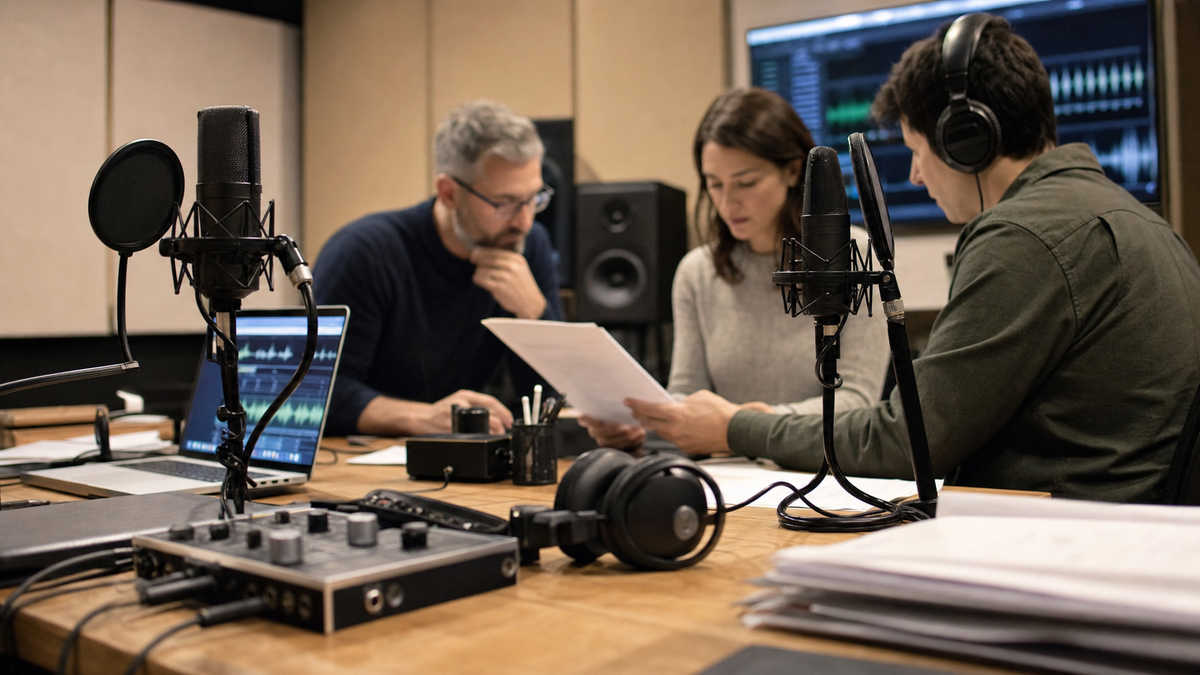
Direct answer: TechRadar's July 2026 coverage says AI voice cloning can happen quickly while legal rights over a person's voice remain patchy, even as public figures such as Taylor Swift and Matthew McConaughey seek trademark protection for distinctive voice and likeness assets. AP previously reported that Swift filed sound-mark applications that experts linked to AI misuse risk. Voice-agent buyers should respond with a consent proof packet before using any cloned, licensed, or synthetic brand voice.
What happened
- TechRadar reported that AI voice cloning is raising urgent questions about whether a person owns their voice and what legal rights apply when a synthetic copy is created.
- The same coverage used Taylor Swift and Matthew McConaughey as examples of public figures seeking stronger protection for distinctive voice or identity assets.
- AP reported in April 2026 that Swift filed three trademark applications, including sound marks, with an expert describing them as a move to protect against AI threats.
- Legal commentary has noted that trademark, publicity, privacy, performers' rights, and proposed digital-replica laws create a patchwork rather than one simple consent rule.
- Research on voice cloning has also warned that cloned voices can change perceived authority, warmth, and trust, which matters when callers share sensitive information with AI systems.
Why this is trending
- Voice cloning is now a consumer trust story because a voice can signal identity, authority, consent, brand, and emotional context more strongly than text.
- Celebrity filings make the issue visible, but ordinary employees, patients, customers, creators, and call-center agents face the same uncertainty at smaller scale.
- Voice-agent buyers are licensing voices, cloning staff voices, using synthetic receptionist voices, and retaining call recordings while legal and consent expectations are still changing.
The Voice Agent Index take
A voice-agent buyer should not deploy a cloned or branded synthetic voice because it sounds good or because a vendor says it is licensed. The buyer needs a Voice Identity Consent Proof Packet: voice-source record, consent terms, approved use cases, AI identity disclosure, revocation process, retention limit, audit log, misuse detection, and incident response.
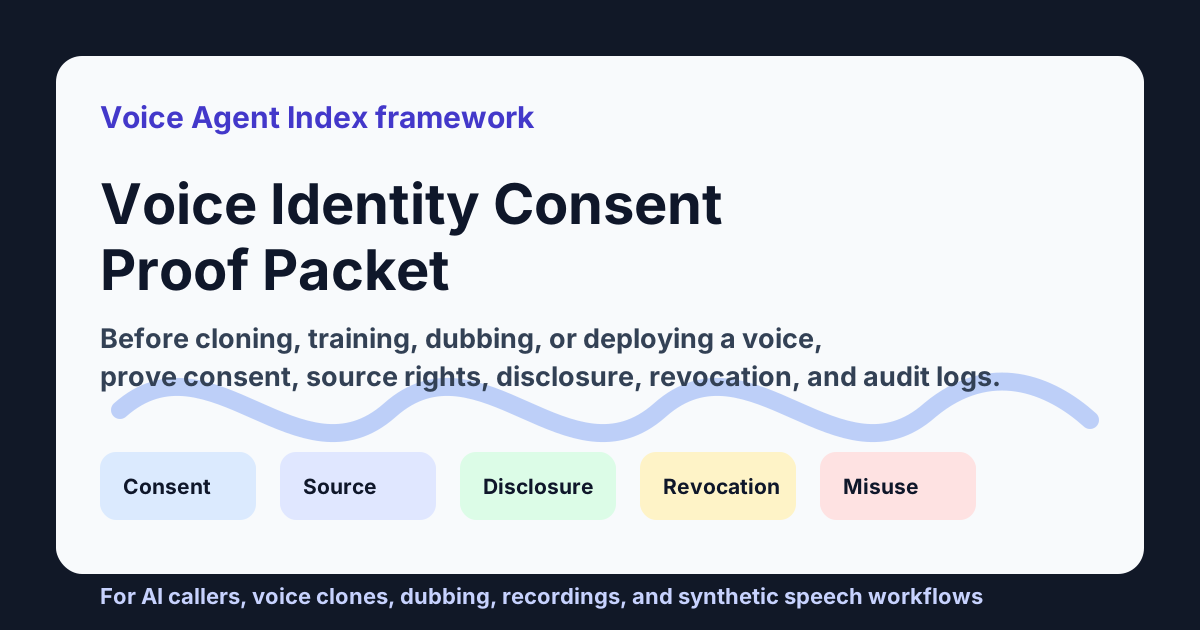
Voice Identity Consent Proof Packet
A buyer checklist for proving AI voice cloning consent across voice-source rights, approved use, disclosure, revocation, retention, audit logs, and misuse response.
| Proof item | Why it matters | Buyer ask |
|---|---|---|
| Voice-source rights | A voice model may be built from an employee recording, actor library, customer audio, vendor stock voice, or cloned brand representative. | Show the source, license, performer agreement, allowed use, territory, term, transfer rights, and any restrictions on cloning or model training. |
| Explicit consent | General recording consent does not automatically mean consent to clone, train, resell, or deploy a synthetic version of a person's voice. | Provide signed consent language covering cloning, synthetic speech, training, retention, revocation, compensation, and approved workflows. |
| AI identity disclosure | Callers may rely differently on a synthetic voice if they believe it belongs to a real person, brand representative, clinician, agent, or authority figure. | Document disclosure wording, timing, language variants, test recordings, and jurisdiction rules for inbound and outbound calls. |
| Revocation and retirement | Employees leave, licenses expire, brands change, public figures object, and voice owners may withdraw permission. | Show revocation path, retirement timeline, model-disable controls, replacement voice, customer notice rule, and archive deletion policy. |
| Audit and retention | Disputes require evidence of which voice was used, when, under what license, with what script, and for which call purpose. | Preserve voice version, prompt/script version, call purpose, consent basis, transcript, recording policy, and reviewer notes. |
| Misuse response | A cloned or copied voice can be used for fraud, impersonation, unauthorized ads, or customer deception. | Require abuse detection, takedown owner, provider contact, affected-call search, caller notice, and incident export. |
What buyers should do next
- List every synthetic, cloned, licensed, or generated voice used in inbound calls, outbound calls, demos, ads, reminders, IVR, and follow-up messages.
- Attach a source-rights record and consent basis to each voice before it is used in production.
- Separate recording consent from cloning consent, model-training consent, commercial-use consent, and resale or transfer rights.
- Write a revocation and voice-retirement path before an employee, contractor, actor, or vendor voice becomes unavailable.
- Log voice version, disclosure wording, call purpose, script version, and audit evidence for every production workflow.
Turn this brief into a vendor packet
Make the vendor prove the workflow before the demo gets polished.
Use the RFP generator and call-test script to turn this news framework into concrete evidence requests, acceptance tests, and escalation rules for your own voice AI rollout.
Buyer FAQs
Can a business clone an employee or actor voice if it has a recording?
A recording alone is not enough for safe production use. Buyers should require explicit cloning and synthetic-use consent, source-rights proof, approved use cases, retention limits, revocation terms, and audit logs.
Why do celebrity voice filings matter to voice-agent buyers?
They show that voice is becoming a protected identity and brand asset. Businesses deploying AI voices need the same discipline at operational scale, even when the voice belongs to an employee, contractor, or licensed voice actor.
What should a voice AI vendor provide before launch?
Ask for voice-source rights, consent terms, disclosure controls, voice-version logs, retention policy, revocation process, misuse response, and proof that customer calls can be audited by voice version.
Sources
- TechRadar: July 2026 coverage of AI voice cloning, voice-rights uncertainty, Taylor Swift and Matthew McConaughey examples, and legal commentary on voice identity.
- Associated Press: April 2026 reporting on Taylor Swift trademark applications, including sound marks, and expert commentary tying the filings to AI misuse risk.
- Gunnercooke: July 7, 2026 legal commentary on AI voice cloning, trade marks, brand protection, and the limits of current protection approaches.
- Voice cloning research: Recent research arguing that voice cloning can alter perceived authority, warmth, trust, and willingness to disclose sensitive information.