

Direct answer: Current Daily Telegraph coverage says AI has made the Hi Mum scam harder to detect by making voice impersonation more convincing. Westpac's April 2026 warning separately said AI-powered impersonation scams, including Hi Mum and business-email or invoice scams, are expected to escalate using cloned voices, faces, and video calls created from seconds of public content. Voice-agent buyers should treat this as a production gate: a persuasive voice must not be enough to move money, change records, reset access, reveal sensitive information, or bypass human review. Require caller identity proof, trusted callback paths, transaction limits, sensitive-data gating, fraud escalation, and customer recovery evidence.
What happened
- The Daily Telegraph reported on July 21, 2026 that AI is making the Hi Mum scam more convincing and harder to detect.
- The report highlighted warnings that voice replication can use short public samples, making familiar-sounding calls more plausible.
- Westpac warned on April 2, 2026 that AI-powered impersonation scams are expected to rise, including Hi Mum, business-email compromise, and invoice scams using cloned voices, faces, and video calls.
- SBS previously reported that the Hi Mum scam had evolved from text messages into voice impersonation calls pretending to be distressed family members.
- The operational pattern matters to voice-agent buyers because trust in a caller's voice is no longer enough proof for high-risk actions.
Why this is trending
- Hi Mum scams are easy for consumers to understand and emotionally urgent, which makes AI voice cloning a mainstream trust problem rather than a niche security issue.
- Voice-agent adoption is moving into appointment booking, billing, healthcare, insurance, collections, and support workflows where callers may ask for sensitive actions.
- The same real-time voice quality that makes customer automation useful can also raise the bar for verification, disclosure, and fraud recovery.
The Voice Agent Index take
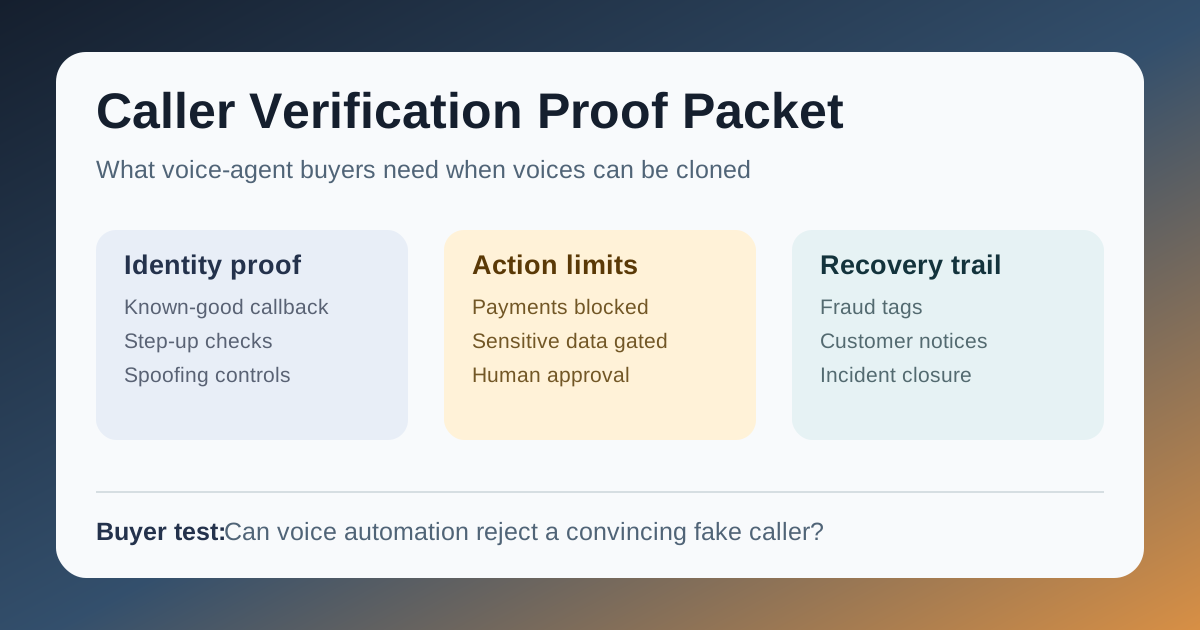
A voice-agent buyer should not approve production actions based on voice confidence alone. The buyer needs a Caller Verification Proof Packet: known-good callback flows, step-up identity checks, spoofing controls, synthetic-voice disclosure where applicable, transaction authority limits, sensitive-data gates, fraud escalation, audit logs, and recovery evidence.
Caller Verification Proof Packet
A buyer checklist for validating voice-agent fraud controls across identity proof, trusted callback paths, synthetic voice risk, transaction authority, sensitive-data limits, escalation, and recovery evidence.
| Proof item | Why it matters | Buyer ask |
|---|---|---|
| Caller identity | Voice cloning makes familiar sound a weak identity signal, especially when a caller claims urgency, family distress, account compromise, or payment pressure. | Require known-good callback paths, account verification, caller-intent checks, spoofing controls, and proof that the agent never relies on voice alone. |
| Trusted callback path | A suspicious caller can control the current call, but not necessarily a verified number, app session, portal, or registered contact method. | Define which actions require callback to a verified number, secure portal confirmation, or human-authenticated channel before proceeding. |
| Transaction limits | A convincing voice should not be enough to transfer funds, issue refunds, change bank details, reset credentials, expose records, or alter appointments. | Set no-go and step-up rules for payments, refunds, account access, protected records, address changes, and emergency or distress scenarios. |
| Sensitive-data gating | Fraudsters can use a cloned voice to request identity, health, insurance, payment, or account data that customers assume is safe to discuss by phone. | Require data-class rules, redaction, consent language, recording policy, approved prompts, and mandatory escalation for high-risk data requests. |
| Fraud escalation | The safest answer to suspicious urgency is often a human review, fraud queue, account lock, or verified callback rather than a faster automated resolution. | Test escalation for family distress, invoice changes, payment urgency, credential requests, new phone numbers, and unusual callback instructions. |
| Recovery evidence | Controls are incomplete unless the organization can prove what happened after a bad call, mistaken disclosure, blocked transaction, or suspicious attempt. | Keep audit logs, lawful recordings, transcript exports, fraud tags, notices, reversal steps, account locks, and incident closure proof. |
What buyers should do next
- List every voice-agent workflow that can collect sensitive information, update records, reset access, schedule callbacks, or influence payments.
- Define actions that require a verified callback, secure portal, human approval, or fraud-team review.
- Create a voice-clone test set with family distress, invoice change, refund, credential reset, urgent callback, and spoofed-identity scenarios.
- Run identity, disclosure, transaction-limit, escalation, and recovery tests through the exact telephony path planned for production.
- Report suspicious-call tags, blocked actions, human escalation quality, customer recovery, and rollback thresholds in the weekly voice-agent QA packet.
Turn this brief into a vendor packet
Make the vendor prove the workflow before the demo gets polished.
Use the RFP generator and call-test script to turn this news framework into concrete evidence requests, acceptance tests, and escalation rules for your own voice AI rollout.
Buyer FAQs
What changed in the Hi Mum scam coverage?
Current reporting says AI voice cloning makes familiar-sounding scam calls more convincing and harder to detect, extending the older Hi Mum text-message pattern into voice impersonation.
Why does this matter to voice-agent buyers?
AI voice agents may be asked to change records, route payments, collect sensitive information, or schedule high-risk callbacks. A convincing voice cannot be treated as identity proof.
What proof should buyers request?
Ask for caller identity checks, known-good callback paths, transaction limits, sensitive-data gating, fraud escalation, audit logs, customer notices, and recovery evidence.
Sources
- Daily Telegraph: July 21, 2026 coverage of AI making the Hi Mum phone scam more convincing and harder to detect, including voice-cloning warnings.
- Westpac: April 2, 2026 warning that AI-powered impersonation scams, including Hi Mum and business-email or invoice scams, are expected to rise using cloned voices, faces, and video calls.
- SBS News: Prior reporting on the Hi Mum scam's shift from WhatsApp and text messages to voice impersonation calls pretending to be distressed family members.