
Direct answer: TechCrunch reported on July 15, 2026 that Rime raised a $24 million Series A led by M13 to help enterprises field customer calls, with Twilio Ventures, Corazon, Unusual, and other investors participating. CMSWire independently covered the round and Rime's enterprise voice AI positioning. Rime's own site says its models are built for human conversation, low latency, 50-plus languages, and customer-controlled environments when compliance demands it. Buyers should treat the funding as a proof trigger, not a shortcut: require evidence for training rights, latency, pronunciation, deployment controls, QA, and fallback before production calls depend on any model.
What happened
- TechCrunch reported on July 15, 2026 that Rime raised a $24 million Series A led by M13, with Twilio Ventures, Corazon, Unusual, and other investors participating.
- The same report said Rime is focused on enterprise customer calls and described its voice-model work around conversational data, pronunciation, and phoneme-level architecture.
- CMSWire independently covered the round and framed it around scaling real-time enterprise voice AI.
- Rime's website says its voice models are made for human conversation, offer low latency, support 50-plus languages, and can run inside a customer's own environment when compliance demands it.
- For buyers, the story is not that one vendor raised money. It is that enterprise voice-model competition is becoming an operating proof contest.
Why this is trending
- Enterprise voice AI is moving from demo-quality voices toward production calls where latency, pronunciation, interruptions, accents, and domain vocabulary matter.
- The round includes strategic telecom relevance through Twilio Ventures, which makes the story more relevant to call-center and AI voice-agent buyers than a generic AI funding item.
- Vendors can sound natural in demos while still failing under regulated workflows, noisy callers, unusual names, long calls, tool-use errors, or human-handoff pressure.
The Voice Agent Index take
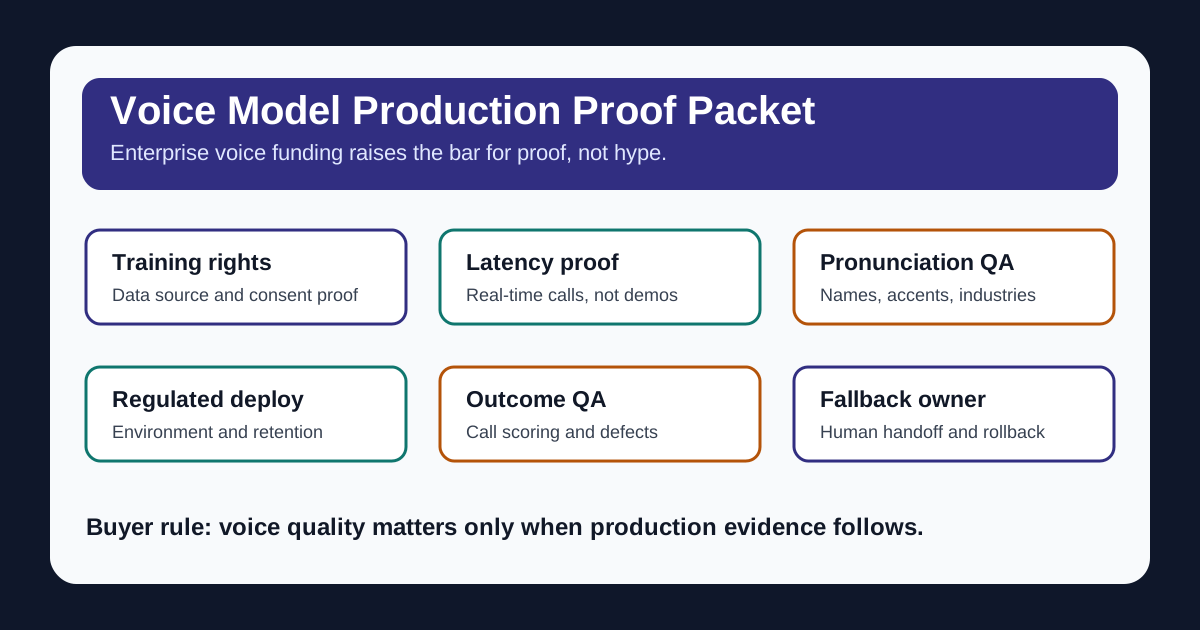
A voice-agent buyer should not approve a vendor because the model sounds good in a short demo. The buyer needs a Voice Model Production Proof Packet: training-rights summary, latency evidence, pronunciation test set, deployment-environment controls, call outcome QA, monitoring, escalation, and rollback ownership.
Voice Model Production Proof Packet
A buyer checklist for validating enterprise voice AI models across training rights, latency, pronunciation QA, regulated deployment, call outcome evidence, and fallback ownership.
| Proof item | Why it matters | Buyer ask |
|---|---|---|
| Training rights | Voice models can be sensitive when training data includes recorded conversations, accents, names, regulated contexts, or customer-specific language. | Ask for data-source categories, rights and consent posture, retention policy, customer-data training limits, deletion controls, and model-update governance. |
| Latency proof | A natural voice model still fails production if callers hear delays, clipped audio, awkward interruption handling, or slow tool responses. | Require live-channel latency tests for your telephony path, region, tool calls, barge-in, interruptions, and long conversations. |
| Pronunciation QA | Names, medication terms, addresses, brands, local places, accents, and industry vocabulary can break trust faster than generic speech quality. | Create a pronunciation test set from real call transcripts and require vendor scoring, corrections, regression tests, and release notes. |
| Regulated deployment | Healthcare, finance, legal, insurance, and public-sector calls need controls for environment, retention, data residency, access logs, and audit evidence. | Ask for deployment options, environment boundaries, retention settings, access logs, data-processing terms, security review, and audit exports. |
| Call outcome QA | A voice can sound realistic while collecting the wrong information, missing intent, mishandling policy, or failing to complete the customer job. | Score real calls against outcome rubrics, tool actions, escalation quality, customer corrections, repeat contacts, and defect categories. |
| Fallback ownership | Production voice systems need a named owner for bad audio, failed tool use, customer distress, urgent escalation, and model rollback. | Require handoff tests, supervisor ownership, rollback thresholds, monitoring alerts, incident timelines, and customer recovery evidence. |
What buyers should do next
- Separate voice quality claims from production evidence: latency, interruptions, pronunciation, tool use, escalation, and call outcomes.
- Build a test set from real names, addresses, accents, industry terms, objections, noisy calls, and long customer conversations.
- Ask every voice-model vendor for data-rights, retention, deployment-environment, and audit-export documentation.
- Run live-channel tests through the exact telephony, region, model, tool, and handoff path planned for production.
- Set rollback thresholds for failed handoffs, pronunciation defects, latency spikes, tool mistakes, and customer complaints.
Turn this brief into a vendor packet
Make the vendor prove the workflow before the demo gets polished.
Use the RFP generator and call-test script to turn this news framework into concrete evidence requests, acceptance tests, and escalation rules for your own voice AI rollout.
Buyer FAQs
What did Rime announce?
TechCrunch and CMSWire reported that Rime raised a $24 million Series A in July 2026 to scale enterprise real-time voice AI, with M13 leading and telecom-relevant participation from Twilio Ventures.
Why does a funding round matter to voice-agent buyers?
The round signals that enterprise voice-model competition is intensifying around production calls, not only demos. Buyers should respond by demanding evidence for latency, pronunciation, deployment controls, QA, and fallback.
What should buyers ask voice-model vendors for?
Ask for training-rights posture, live-channel latency evidence, pronunciation QA, regulated-deployment controls, call outcome scoring, monitoring, escalation tests, and rollback ownership.
Sources
- TechCrunch: July 15, 2026 coverage of Rime's $24 million Series A, investor list, and enterprise customer-call positioning.
- CMSWire: Independent coverage of Rime's Series A and real-time enterprise voice AI positioning.
- Rime: Company site describing Rime's voice models, low-latency positioning, 50-plus languages, and customer-environment deployment option.